The People Who Show Up: What Your Birthday Really Tells You About Your Friendships

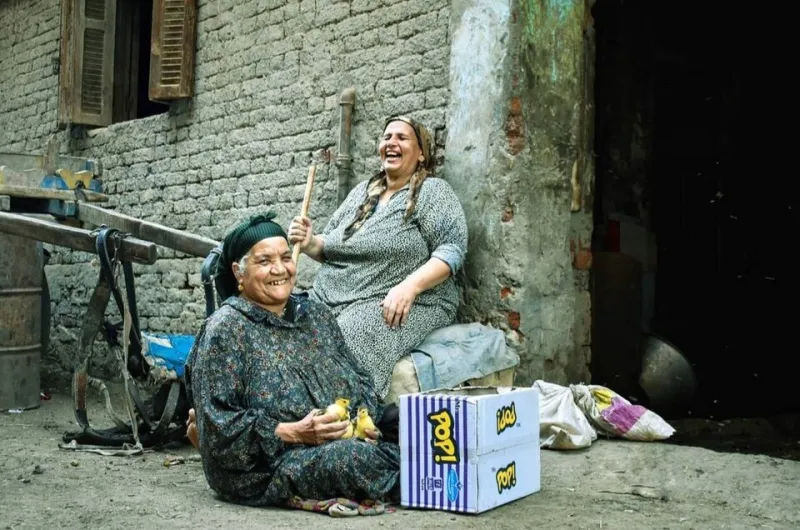
Photo: Arkansas National Guard, Public domain, via Wikimedia Commons
There's a particular kind of sting that comes around every year, often uninvited, right alongside the birthday cake. You planned something. You hoped. And then — not everyone came through. Maybe they forgot. Maybe they had a reason. Maybe they just didn't make it a priority. And now you're sitting with feelings you didn't expect to have on a day that's supposed to be about celebration.
Birthdays are funny like that. They're one of the few days of the year where your social world gets a kind of informal audit. Who reached out? Who made plans? Who showed up — really showed up — and who quietly let the day pass?
This isn't a small thing. And it's worth talking about honestly.
Why Birthdays Feel So High-Stakes for Friendships
In everyday life, the rhythms of friendship can stay pretty comfortable and undefined. You text occasionally, you see each other when it works out, you both say "we should get together soon" and mean it in a general kind of way. That's normal. That's most friendships.
But a birthday is a specific moment. It's a date on the calendar that everyone has access to, and it creates a small but real social expectation: acknowledge this person today. And when that expectation goes unmet — especially by someone you considered close — it can feel like more than just a forgotten date. It can feel like a statement.
The truth is, it sometimes is one. Not always. But sometimes.
People show you who you are to them through their consistency over time — and birthdays are one of the clearest windows into that.
The Difference Between Busy and Choosing Not To
Here's where things get complicated: almost everyone is genuinely busy. Life in the US right now is relentless. People are managing jobs, kids, aging parents, their own mental health, financial stress — the list goes on. So when someone misses your birthday, the knee-jerk interpretation ("they don't care about me") isn't always accurate.
But there's a meaningful difference between being busy and consistently choosing not to prioritize you.
The friend who forgets your birthday this year but was there for you during a hard season, who checks in, who makes time when it matters — that friend probably just forgot. Life got in the way. It happens.
The friend who has missed your birthday three years running, who you always seem to be the one reaching out to, who shows up inconsistently even when things are easy — that pattern is telling you something different.
Birthdays don't create friendship problems. They reveal them.
The Ones Who Always Show Up
On the flip side, pay attention to who does come through. Every year. Without being asked twice. Who texts at midnight just to be the first one. Who drives an hour to be there. Who remembers the details — the thing you said you wanted, the restaurant you mentioned once in passing, the tradition you've built together.
Those people are rare. And they deserve to be recognized as such.
It's easy to take consistent people for granted because their reliability becomes the background noise of your life. But those are the friendships worth investing in, protecting, and actively nurturing. If someone makes your birthday feel special year after year, they're telling you something about who you are to them. Believe them.
What To Do With the Complicated Feelings
So what happens when your birthday leaves you feeling more lonely than celebrated? When the turnout was low, the texts were sparse, and the day just... didn't feel like you hoped it would?
First, give yourself permission to feel that without immediately explaining it away. It's okay to be disappointed. You don't have to perform gratitude for a celebration that fell short of what you needed.
But then — and this is the important part — try to separate disappointment from conclusion. One quiet birthday doesn't necessarily mean your friendships are broken. It might mean:
- You need to communicate more clearly what you actually want (many people genuinely don't know how important birthdays are to you unless you tell them)
- Your social circle is going through a transition, which is normal and doesn't have to be permanent
- Some friendships have naturally run their course, and that's okay too
- You might need to build new connections — ones that are in a life stage more aligned with yours
The worst thing you can do is internalize a quiet birthday as proof that you're not lovable or not worth celebrating. That's not what it means.
Recalibrating Your Expectations (Without Lowering Your Standards)
There's a balance worth finding here. On one side: releasing the expectation that every person in your life should treat your birthday like a national holiday. Some people just aren't birthday people. Some grew up in families where it wasn't a big deal. That's a style difference, not a reflection of how much they value you.
On the other side: knowing what you actually need and not shrinking yourself to accommodate people who repeatedly come up short.
If birthdays are meaningful to you — and for a lot of people, they genuinely are — that's a legitimate thing to want acknowledged. You're allowed to have friends who celebrate you. You're allowed to invest more energy in the relationships where that care is mutual.
Building a Circle That Actually Wants to Celebrate You
Here's the reframe that changes everything: instead of waiting to see who shows up and then reacting to the results, get intentional about the friendships you're building throughout the year.
Celebrate other people's birthdays with real attention. Show up for the people who show up for you. Be the friend who remembers, who plans, who makes someone feel seen on their day. Reciprocity tends to come back around.
Also — and this one is underrated — tell people what you want. "I'm planning something for my birthday and I'd really love for you to be there" is not a desperate ask. It's an invitation. It gives people the chance to show up who might not have realized how much it mattered to you.
Your birthday is one day a year. But what it reflects — the quality of your connections, the people who see you, the community you've built — that's something you're shaping every other day of the year too.
The good news? You have a lot more say in that than it might feel like when you're staring at a phone that hasn't buzzed yet.