Why Every Big Birthday Should Feel Like a First: Celebrating Milestones Across Every Decade
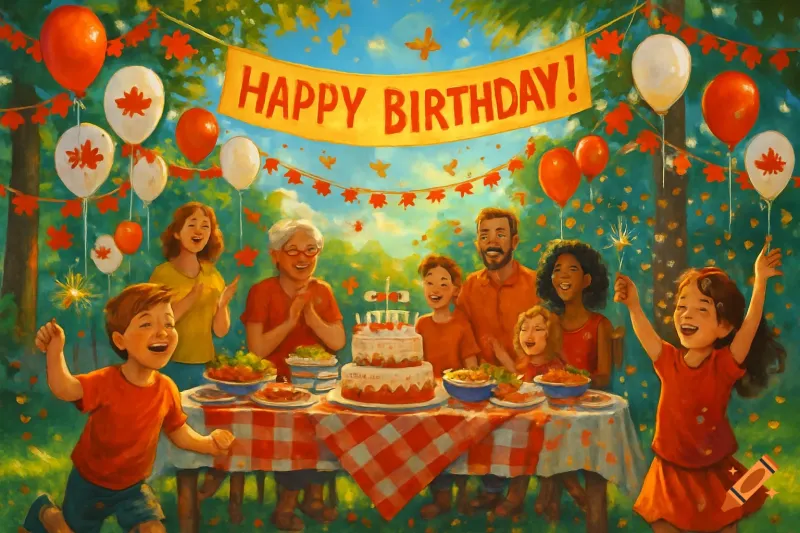
Photo: multigenerational family celebrating milestone birthday outdoors with balloons and cake, via media.craiyon.com
Here's an uncomfortable truth about milestone birthdays: most of us celebrate them the exact same way, decade after decade. Big dinner. Cake. Toasts. Maybe a party. And while there's nothing wrong with that formula, there's something quietly sad about turning 50 the same way you turned 30 — especially when the person doing the celebrating has changed enormously in between.
The best birthday celebrations don't just mark the passage of time. They honor who you've become. And that requires a little intentionality, some honest self-reflection, and a willingness to evolve how you party as you grow.
The Psychological Shift That Changes Everything
Before we get into the practical stuff, it's worth acknowledging something: the way you feel about birthdays changes dramatically across your lifetime, and that emotional context should shape how you celebrate.
In your 20s, birthdays are often about novelty and freedom — the first time you can do certain things, the thrill of being young and unencumbered. By your 30s, there's often a subtle undercurrent of evaluation: Where am I? Where did I think I'd be? The 40s can feel like a reckoning with mortality for some, or a glorious "I finally know who I am" moment for others. Your 50s and 60s tend to bring a deeper appreciation for relationships over spectacle. And milestone birthdays in your 70s and beyond often become profound communal events — less about the person's age and more about the legacy they've built.
Once you recognize that each decade brings a different emotional landscape, you can stop trying to replicate last decade's party and start designing something that actually fits now.
Your 21st: Go Big, But Make It Personal
The 21st is culturally loaded in America — it's practically a rite of passage. The instinct is to go out, hit the bars, and let chaos reign. And sure, that's fun. But the parties people remember most from their 21st aren't the ones where they blacked out. They're the ones that felt theirs.
Whether that means a house party with a handpicked crew, a road trip with your best friends, or a dinner that lasts four hours because the conversation never stops — lean into specificity. What do you actually love? Build the night around that.
Your 30th: The Pivot Point
The 30th birthday gets a lot of cultural anxiety attached to it, and honestly, most of that is nonsense. But it is a legitimate inflection point, which makes it worth celebrating differently.
This is a great age to shift from "party for the sake of partying" to "experience that means something." A weekend trip with your closest friends. A dinner where everyone shares a memory about you. A solo adventure you've always put off. The 30th works best when it feels like a declaration — not a mourning of your 20s, but a genuine celebration of who you're stepping into.
Budget note: By 30, most people have slightly more financial flexibility than they did at 21. Redirect that toward quality over quantity — one great experience rather than a sprawling event that drains your account.
Your 40th: Stop Playing It Safe
Something strange happens around 40: people either go all-out or quietly try to ignore the birthday entirely. The latter is a mistake.
The 40th is arguably the best birthday to do something genuinely surprising — not just for guests, but for yourself. Learn something new. Go somewhere you've never been. Throw a theme party so specific and weird that only the people who really know you will fully appreciate it. This is the decade where self-consciousness starts to fade and you can celebrate more authentically than ever before.
If you have kids by this point, involve them in a way that creates a shared memory — not just a moment where they watch adults celebrate.
Your 50th: Let the People In
By 50, the most meaningful thing you can do for a birthday is acknowledge the relationships that got you there. This is less about what you want to do and more about creating a space where the people who matter most can show up for you — and for each other.
Consider a format that encourages storytelling: a backyard gathering where guests bring a photo or memory, a long weekend at a rented house with your closest people, or even a video compilation from friends and family who can't travel. The 50th hits differently when it's a genuine reunion of your life's chapters.
This is also the decade to stop worrying about the guest count and start thinking about the guest quality. A dinner for 20 people who adore you beats a party for 100 people who sort of know you.
Your 60th, 70th, and Beyond: Legacy Over Spectacle
Late-life milestone birthdays often become community events in the best possible way. The people around you aren't just celebrating your age — they're celebrating everything you've built, everyone you've loved, and everything you've survived.
For these milestones, consider shifting the focus outward. A charitable donation in your name. A gathering where you share life lessons with younger family members. A "this is your life" style celebration where different eras of your story are represented. These formats honor the full arc of a life lived, not just the number on the cake.
And if you're planning a 100th? Go completely over the top. At that point, you've earned every balloon.
The Through-Line: Make It Mean Something
Regardless of the decade, the birthdays people remember — the ones that feel genuinely different from the last one — share a common thread: they were designed with intention. Someone thought about who this person is right now and built an experience around that truth.
You don't need a bigger budget or a more elaborate venue. You need a clearer answer to one simple question: What does this birthday actually mean, and how can the celebration reflect that?
Answer that honestly, and you'll never have the same birthday twice.