One Craft, One Game, One Cake: The Kid Party Formula That Actually Works
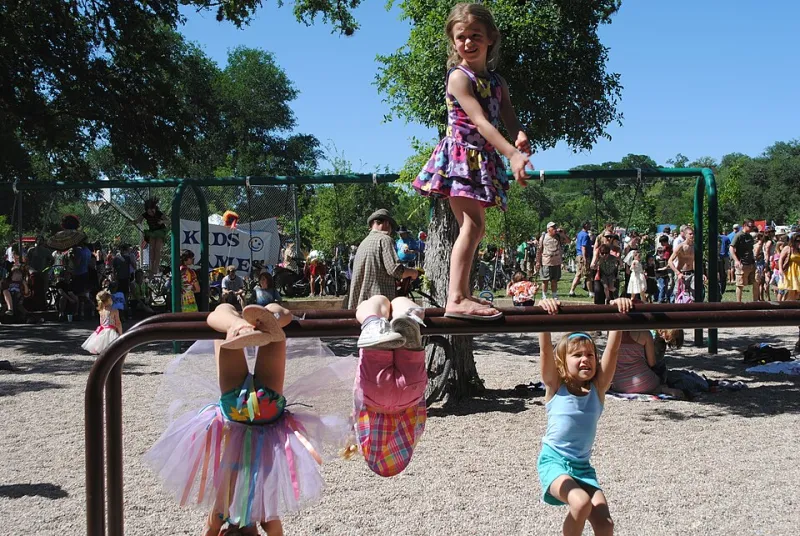
Photo: Jen W, CC BY 2.0, via Wikimedia Commons
Ask any seasoned kids' party entertainer what ruins a birthday faster than rain on a bounce house, and you'll get the same answer: too much stuff on the schedule.
We've all seen it — the Pinterest board with a craft station, a scavenger hunt, a piñata, musical chairs, a sensory bin, a photo booth, and a themed snack bar. The parent running around with a clipboard. The kids, meanwhile, are having the most fun of the entire afternoon with the empty cardboard boxes the decorations came in.
There's a better way, and it fits neatly into our name: 1-2-3.
Why Over-Scheduling Backfires
Child development folks have been saying it for years: kids don't need constant direction to have fun — they need open space to play, and just enough structure to keep the chaos from tipping over. When you stack ten activities back to back, a few things go wrong.
First, transitions are where meltdowns live. Every time you pull kids away from something they're enjoying to start something they haven't asked for, you risk tears — especially with the four-to-seven crowd.
Second, you exhaust yourself. A parent who's been directing activities for two straight hours has zero patience left when the cake comes out. And cake time, as any veteran will tell you, is the moment that needs you most.
Third, unstructured free play is often the part kids remember most. Cutting it short to run one more organized game is a trade you rarely win.
The 1-2-3 Formula
Here's the whole system: one craft, one game, one cake moment. That's it. Everything else is free play, food, and opening the door.
One craft — something simple they can finish in ten to fifteen minutes and take home. Think paper-plate masks, decorate-your-own goody bags, or sticker frames. The trick: it doubles as a party favor, which means one less thing to buy.
One game — a single, high-energy, everyone-plays-at-once game. Freeze dance, a balloon pop, a good old-fashioned relay. Skip anything with elimination; nobody wants a five-year-old sitting out for twenty minutes.
One cake moment — candles, song, the whole ritual. This is the emotional peak of the party. Protect it. Don't rush it, don't let it collide with a game, and don't schedule it right before pickup when half the guests are already pulling on shoes.
A Plug-and-Play Timeline
For a two-hour party, here's a template that works from age four to about ten:
- First 30 minutes: Arrival and free play. Kids trickle in; don't start anything they'll miss.
- Next 20 minutes: The craft. Do it early while energy is focused.
- Next 30 minutes: The game, then free play again.
- Next 30 minutes: Food and the cake moment. Sing loud, snap photos, breathe.
- Final 10 minutes: Wrap-up, favors, goodbyes.
That's the entire plan. Two structured activities and one ritual, cushioned by free play.
Adapting for Age and Budget
For toddlers, swap the game for a bubble machine or dance-along — and shorten everything. Ninety minutes is plenty.
For tweens, the craft can graduate to something cooler: tie-dye shirts, slime stations, or a DIY pizza topping bar (technically food, functionally a craft). The cake moment still matters, even if they pretend it doesn't.
On a tight budget? This formula is practically made for it. One bag of craft supplies, one game that needs nothing but music and space, and one cake from the grocery store bakery. The party costs a fraction of the rented-entertainer route, and the kids won't know the difference.
The Real Secret
The 1-2-3 formula isn't really about activities. It's about giving yourself permission to do less — and trusting that a birthday party with breathing room beats a birthday party with a itinerary. Three beats, plenty of space between them, and a kid blowing out candles at the center of it all.
That's a party people remember. And honestly? That's the whole point.